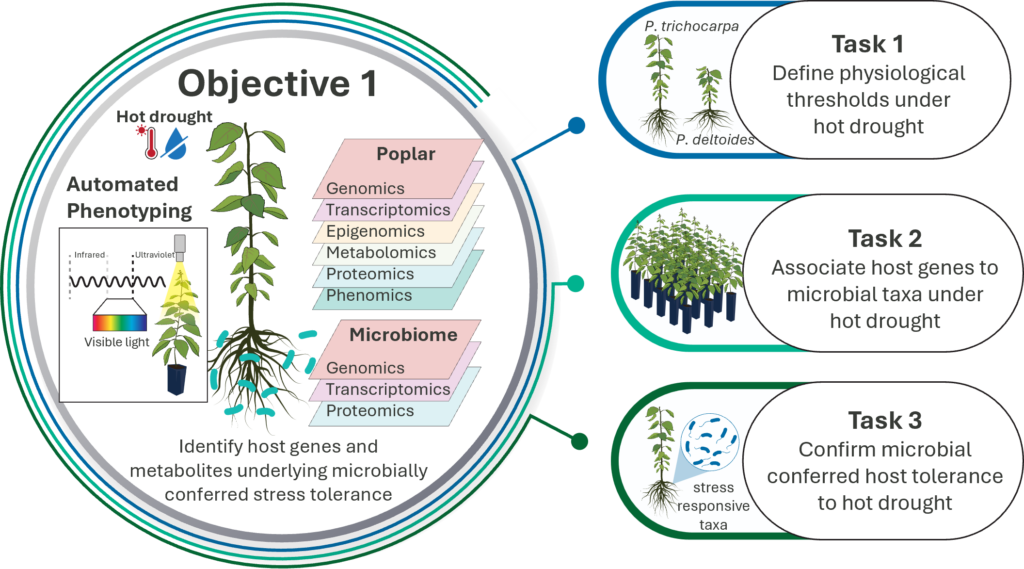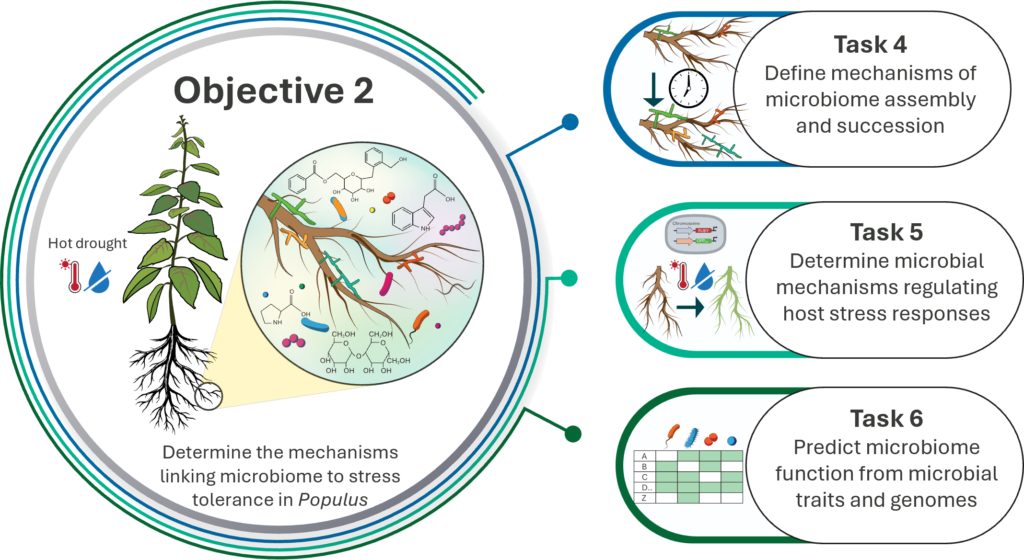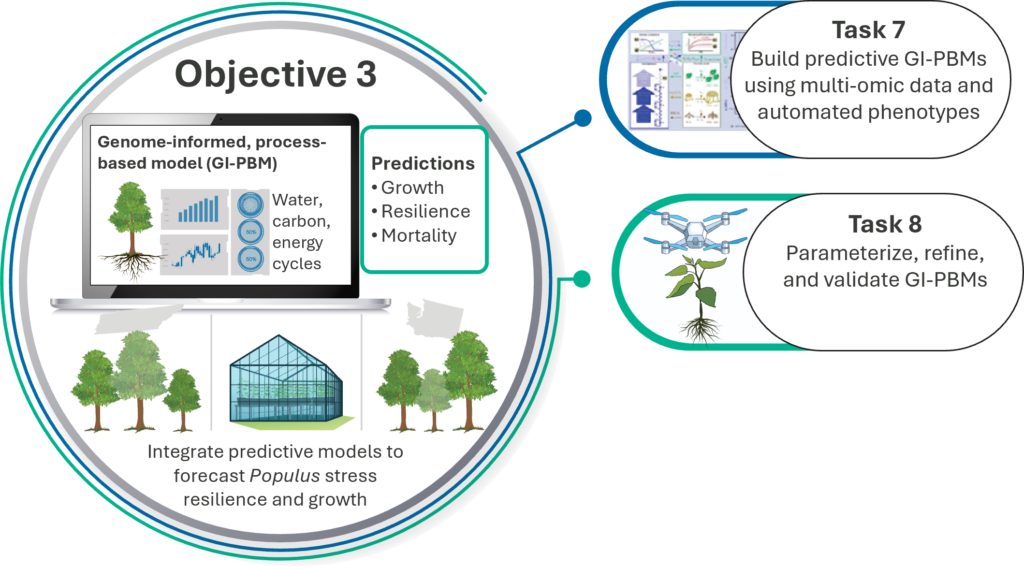

The Plant-Microbe Interfaces (PMI) Science Focus Area seeks to develop a genome-informed understanding of plant-microbiome systems that enables their rational design for resilient biomass production, phytoming critical minerals, and the emerging bioeconomy. Over the next three years, PMI will determine how Populus and its associated microbiome respond to combined heat and drought stress, using this interaction for understanding plant resilience under increasingly variable and extreme environmental conditions. Grounded in genomic science, the program integrates systems biology, plant science, microbiology, ecology, and advanced computational approaches to connect genes to plant microbiome systems across variable environments. Populus provides an ideal model because of its ecological importance, extensive genomic resources, role as a bioenergy feedstock, and potential for critical material recovery. Three tightly integrated objectives guide the research: (1) identify the host genetic associations of microbiome-conferred resilience; (2) determine the molecular and ecological mechanisms linking microbiome assembly to host function; and (3) integrate these discoveries across laboratory, greenhouse, and field environments to establish a genome-informed, multi-scale modeling framework relating plant genetics, microbial traits, and environment to plant performance under variable environmental conditions. These advances will support DOE BER’s mission to understand, predict, and ultimately harness biological systems to advance feedstock production for biomass, phytomining, and bioproducts.
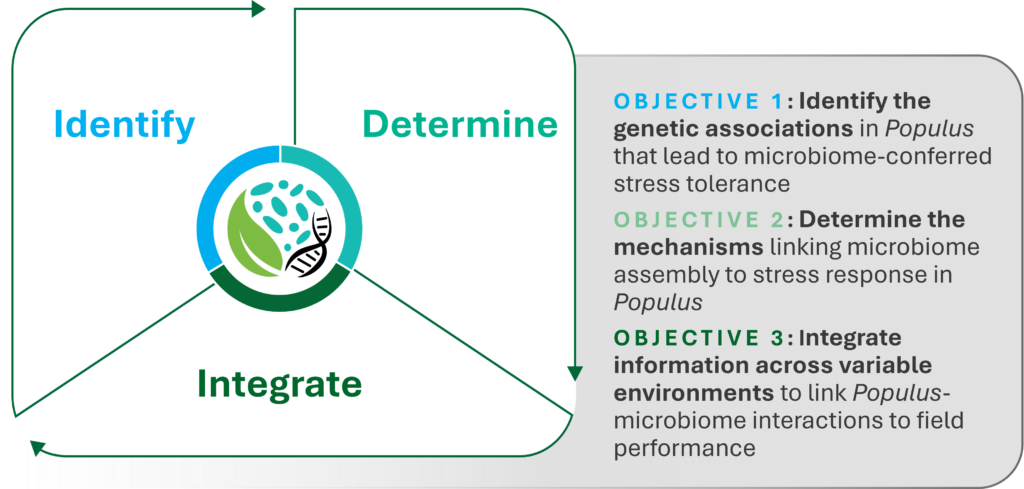
Overview of major objectives and flow of experimental information. Known genes and metabolites involved in Populus’ response to hot drought (hot drought), along with GWAS-based gene discovery will be used to define plant-microbe association traits. The mechanistic bases for system function will be defined and this information, combined with an AI-supplemented process model, will facilitate prediction of system response in field settings. Feedback from experimental findings will inform future studies.